
One Senior Engineer, Every Vessel



Every P&ID your engineers touch becomes a live knowledge graph : read, cross-checked against code, and redlined against your own standards before it ever reaches a human reviewer.
It is tempting to point a general-purpose language model at a folder of drawings and call it done. Here is what actually happens when you try.
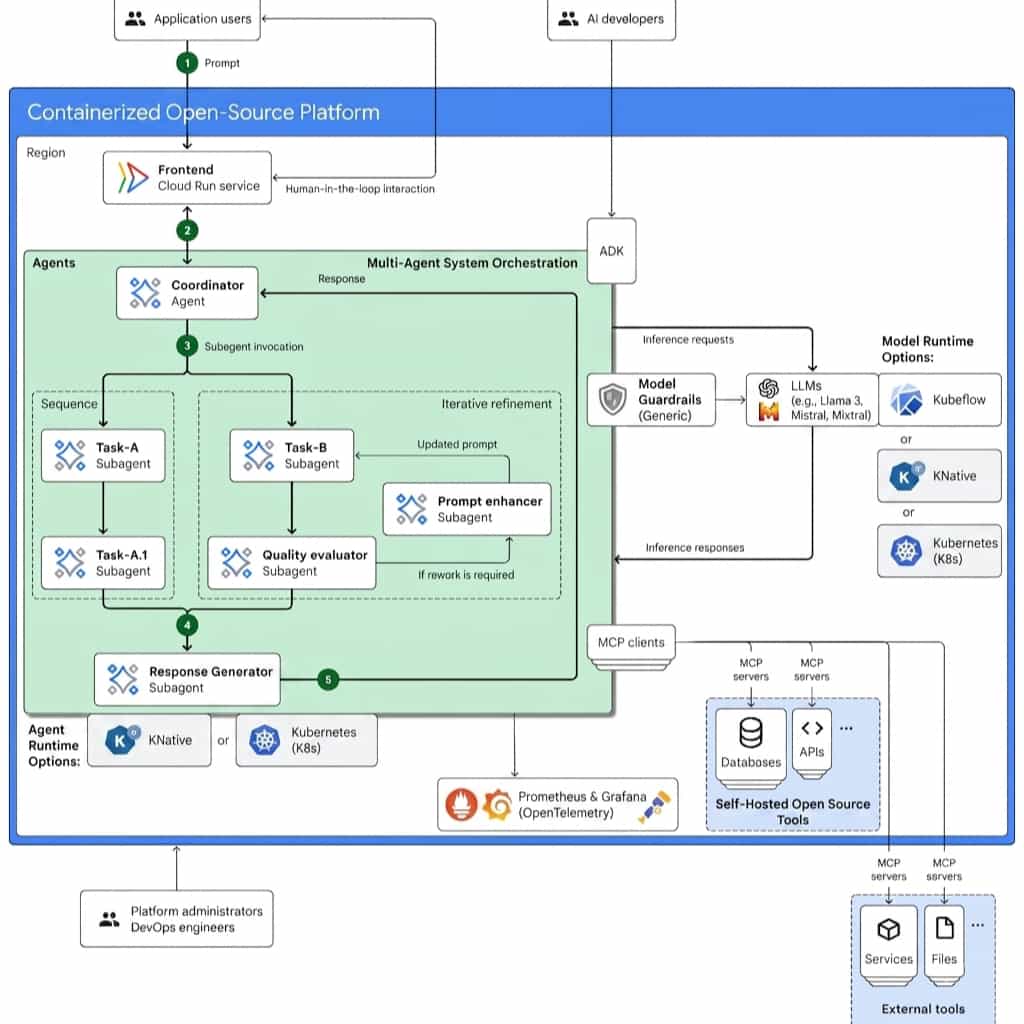
Six stages, a shared blackboard (Redis for working state, Postgres for records, Neo4j for the knowledge graph), and a council that owns final judgment when agents disagree.
Accepts scanned raster (PDF, TIFF, JPEG) and native CAD-derived vector formats without preference; a fortieth-generation photocopy and a fresh export from the CAD system go through the same pipeline. Deskew, contrast normalisation, and resolution targeting to 4096x4096 for legibility of small callouts.
Every sheet returns a per-region confidence score before anything downstream touches it. Sheets that fall below threshold are routed back for a re-scan request rather than silently processed at low fidelity. A wrong answer confidently stated is worse than no answer.
A vision-language layout model segments the sheet into its real document structure: title block, bill of materials table, orthographic and section views, notes, revision block. This is document understanding, not object detection: the model has to know that a table inside a border is a BOM, not a note.
The layer that matters most sits underneath: every feature control frame is parsed into a structured object under ASME Y14.5 and the ISO GPS family (ISO 1101 for form and orientation, ISO 5459 for datum systems, ISO 8015 for the governing principle). A feature control frame is never treated as text. It is decomposed into its characteristic symbol, tolerance zone, material modifiers, and datum reference frame, each one a queryable field.
The drawing number and revision are used to retrieve the authoritative 3D model from your PLM or CAD vault, exchanged as STEP AP242, the interchange format built specifically to carry model-based definition data including PMI (product manufacturing information) alongside geometry. The 2D sheet is registered against the 3D model through feature matching, so every view is understood as a projection of a specific, known solid rather than an image to be interpreted from scratch.
Where no CAD record exists, an older drawing with no digital twin, the system falls back to constrained 3D reconstruction from the orthographic views themselves, flagged at lower confidence and routed for human confirmation before anything downstream depends on it.
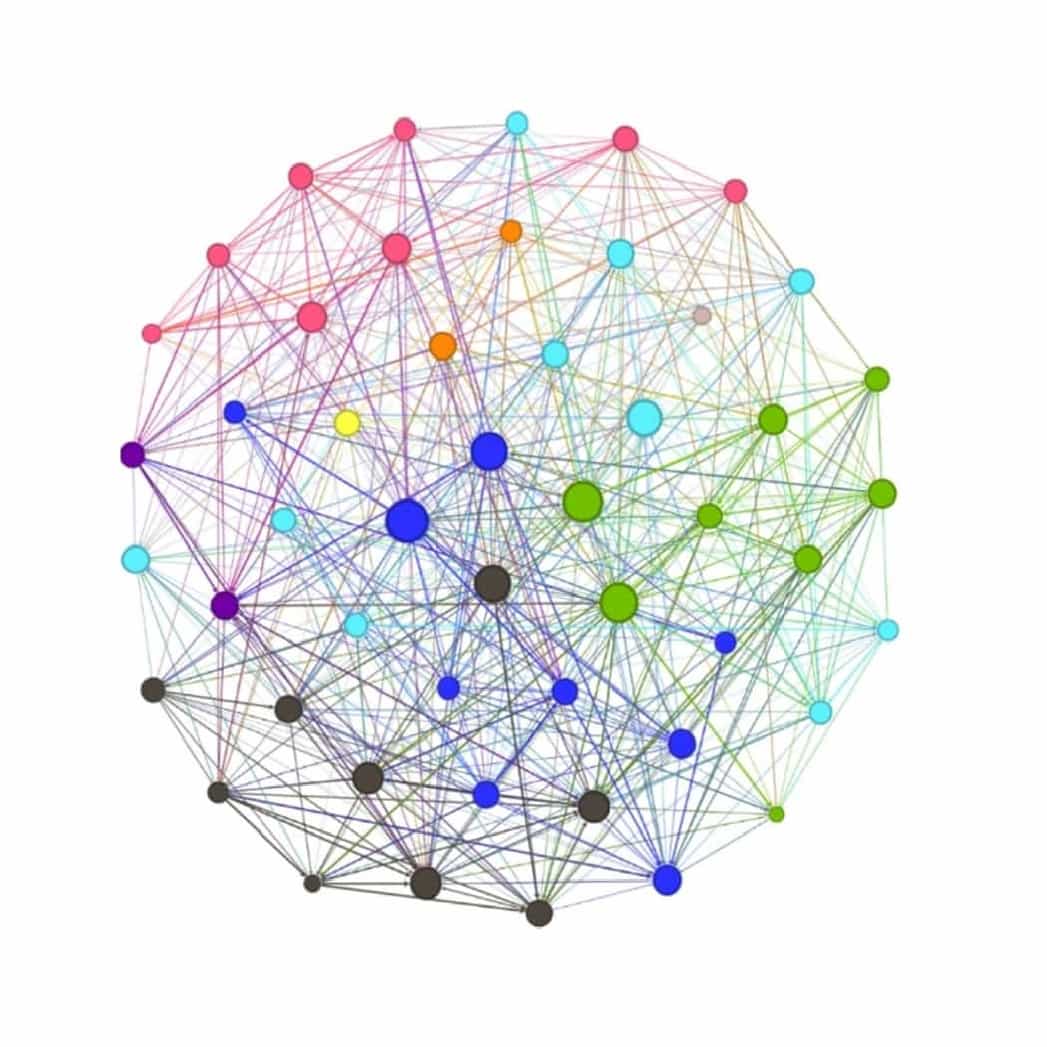
Every extracted fact becomes a node: Part, Feature, Dimension, Tolerance, Datum, Material, Process, Standard Clause, Revision. Edges are typed and directional: a Dimension constrained-by a Tolerance, a Tolerance referenced-to a Datum, a Datum defined-on a Feature, a Revision supersedes a prior Revision. This is what makes traceability a query rather than an act of faith.
Specialist agents run against the graph, not the image. A tolerance stack-up analyser walks dimension chains and solves them symbolically, both worst-case and statistical. A manufacturability advisor checks callouts against the process capability of your actual production methods rather than generic textbook rules. A revision-delta agent diffs the current graph against the prior revision's graph, so a quietly moved datum shows up as a structural change, not a paragraph you have to notice.
Each agent returns not just a verdict but a formal reasoning trace: which nodes it read, which equation it solved, what the result was.
When two agents disagree, a tolerance pass from one analysis method against a manufacturability fail from another, a resolution council applies weights specific to your organisation's risk tolerance, documents the dissent rather than silently picking a winner, and produces a single output.
That output is hashed with SHA-256 and written to an immutable audit ledger. The hash is not decoration. It means the finding you are looking at today is provably the finding the system produced at the time, unaltered, by anyone, including us.
| Standard | What it governs, here |
|---|---|
| ASME Y14.5-2018 | Geometric dimensioning and tolerancing: feature control frames, datum reference frames, material condition modifiers. |
| ISO 1101 | Form, orientation, location, and run-out tolerancing for the ISO GPS system. |
| ISO 5459 | Datums and datum systems: how reference frames are established and combined. |
| ISO 8015 | The governing envelope principle underpinning every other GPS standard we implement. |
| AP242 (STEP) | Model-based definition interchange: geometry plus PMI in one traceable file. |
| 21 CFR Part 11 | Electronic record and signature integrity, applied where the medical device sector requires it. |
Proprietary drawings, 3D models, and manufacturing know-how are your most valuable assets. Vendor-hosted AI asks you to upload them to someone else's infrastructure. We do the opposite: the system deploys inside your environment, under keys you hold.