The Model Is Not the Product. The Protocol Is.
Most enterprises already have AI teams. What they lack is a protocol that makes their models truly act on live systems, securely and at scale.
The prevailing narrative around enterprise AI has focused almost exclusively on models. Which model has the highest benchmark scores. Which model has the longest context window. Which model costs the least per token. This focus is understandable but it misses the architectural reality that determines whether AI delivers value in production. A model without secure, structured access to live business systems is a conversational interface to its training data. A model connected through a well-designed protocol to databases, APIs, document stores, and business applications becomes an agent that can execute real work. The difference is not model quality. It is integration architecture. And integration architecture is determined by protocol design, not by model selection.
The Model Context Protocol provides a standardized, open-source specification for connecting language models to external tools and data sources. The protocol defines a client-server architecture where MCP servers expose resources, tools, and prompts through a uniform interface, and MCP clients, typically AI applications or agent frameworks, consume these capabilities through a consistent protocol regardless of which underlying system is being accessed. A PostgreSQL database, a Salesforce instance, a Snowflake warehouse, and a proprietary internal API all look the same to the model once they sit behind MCP servers. The protocol abstracts the integration complexity, allowing the model to reason about what it can do without needing to understand how each backend works.
The architectural implications are significant. Without a protocol layer, every integration between a model and a business system is a bespoke engineering project. Authentication, error handling, rate limiting, schema validation, and output formatting are implemented differently for each connection. Maintenance burden scales linearly with the number of integrations. With a protocol layer, these concerns are centralized in the MCP gateway. New tools are added by deploying new servers that conform to the protocol. The model's capability surface expands without rewriting integration code. The protocol becomes the platform, and the platform scales with the organization's needs rather than with its engineering capacity.
The question facing enterprise AI adoption is not which model to deploy. It is whether your architecture treats integration as a protocol problem or as a per-system engineering problem. The answer determines whether your AI capability scales linearly with your engineering headcount or with your business needs.
Clean Separation of Concerns Is Not Optional at Scale
The architecture of an MCP-based agent system rests on a principle that is well understood in software engineering but frequently abandoned in AI system design: clean separation of concerns. The language model reasons. The protocol layer transports. The MCP servers execute. The gateway enforces policy. The event bus records. Each component has a single, well-defined responsibility, and the interfaces between components are standardized. This separation is not academic. It is what makes the system debuggable, securable, and maintainable when it moves from a single-agent proof of concept to a production fleet serving hundreds of concurrent users across dozens of integrated systems.
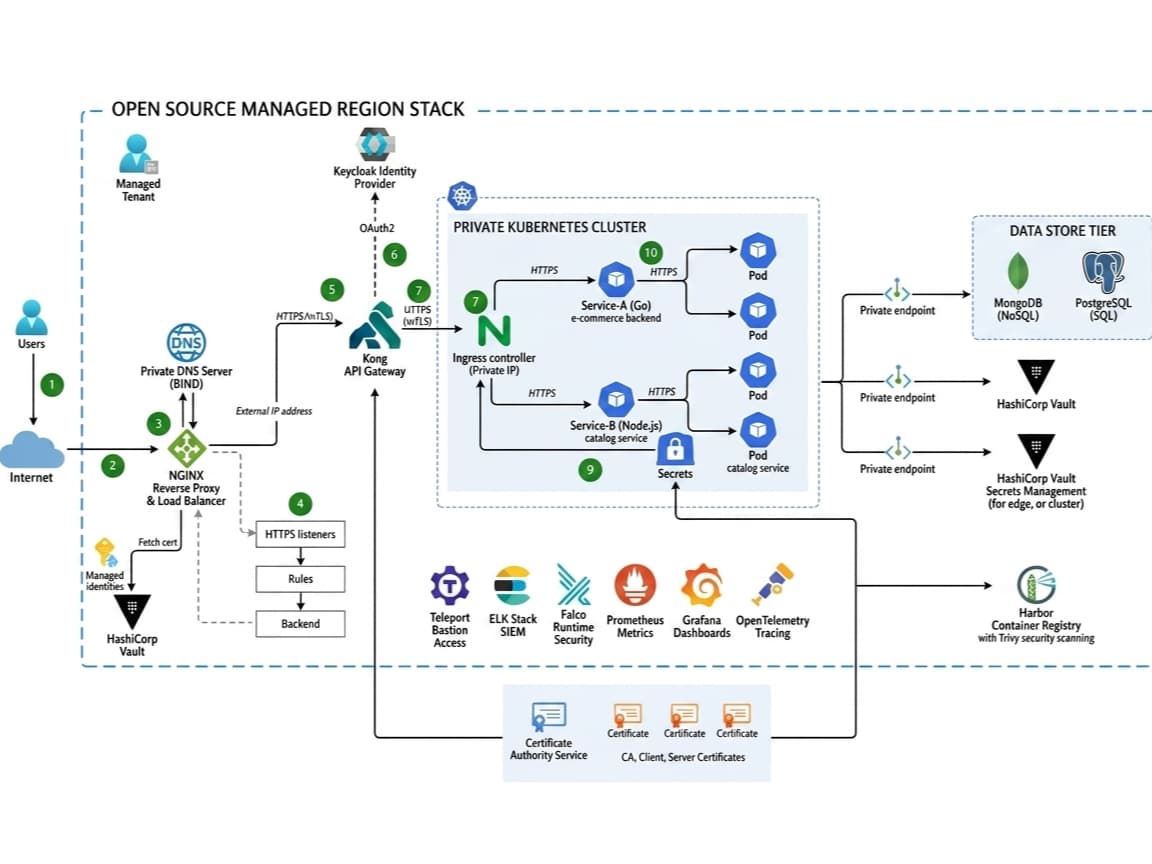
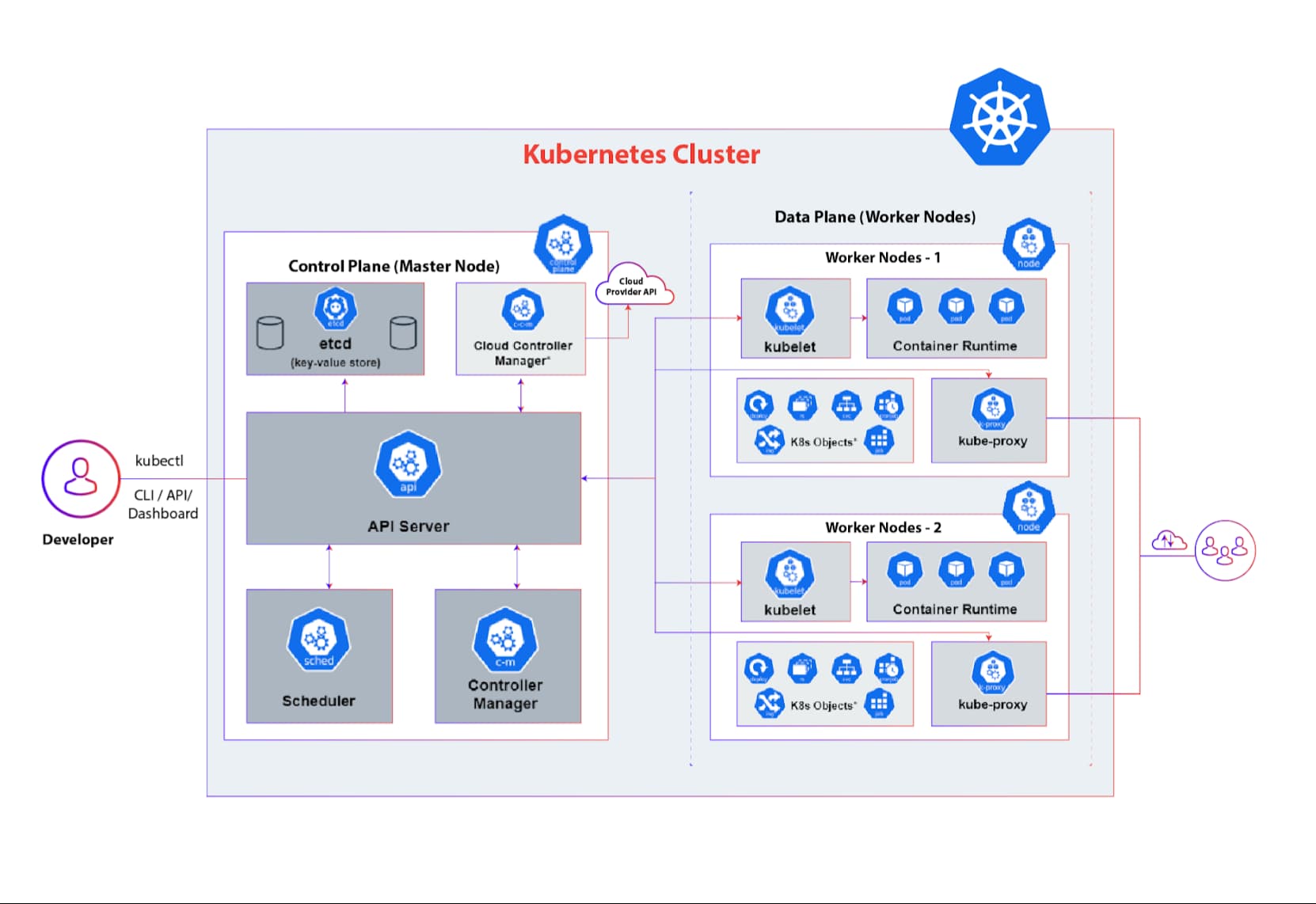
The MCP gateway is the architectural centerpiece. It provides centralized authentication, rate limiting, and schema validation for every upstream server. OAuth2-proxy handles identity federation, ensuring that tool invocations carry the appropriate user context and that access to backend systems respects existing enterprise identity infrastructure. JSON-RPC is the message format, with schemas enforced at the gateway before any request reaches a server. This means malformed tool calls are rejected at the perimeter, not discovered through runtime errors in backend systems. The gateway also provides cryptographic attestation of tool calls, creating an immutable record of which agent invoked which tool with which parameters on behalf of which user.
Behind the gateway, MCP servers expose specific capabilities. Each server is a focused microservice that wraps a particular backend system or function. A PostgreSQL server exposes resources as typed database views and tools as parameterized queries. A file system server exposes directories as resources and file operations as tools. A GraphRAG server exposes entity graphs and multi-hop traversal capabilities. The servers are implemented using FastMCP's decorator pattern for rapid scaffolding, with each tool defined as a typed function whose parameters and return values are validated against the protocol schema. The result is a composable architecture where new capabilities are added by deploying new servers, each independently testable, independently deployable, and independently scalable.
One Agent Reasons. Many Agents Negotiate.
Single-agent architectures reach fundamental limits when the task domain exceeds what one model can hold in context or what one set of tools can address. A legal agent that must reason across case law, regulatory filings, and contract terms requires tool access spanning multiple specialized databases. A financial agent that must analyze market data, assess compliance implications, and generate client communications needs to coordinate across systems with different access patterns, latency profiles, and authorization boundaries. Monolithic agents that attempt to handle all of these responsibilities within a single reasoning loop become unwieldy as the tool surface expands. The engineering response is to decompose the problem across multiple specialized agents, each with a focused scope of tools and responsibilities, coordinated through structured interaction protocols.
The coordination architecture we deploy is heterarchical rather than hierarchical. There is no master agent that commands subordinates. Instead, specialized agents negotiate task decomposition through structured debate protocols. When a complex task arrives, agents with relevant tool access propose sub-tasks they can handle. An orchestrator agent evaluates proposals against task requirements, resolves conflicts, and assembles a task decomposition plan. Agents execute their assigned sub-tasks independently, reporting results back to the orchestrator, which synthesizes the collective output. The debate protocol is logged immutably on the MCP-backed event bus, creating a complete record of which agent proposed what, which proposals were accepted or rejected, and why.
This architecture addresses the scaling limitations of single-agent systems through specialization and parallelization. Each agent maintains context only for its domain, avoiding the context window pressure that degrades monolithic agents. Tool access is scoped: a compliance agent cannot accidentally invoke a trading system function, because its MCP server connections are restricted to compliance databases. Failures are contained: if the market data agent encounters an error, the compliance agent continues processing unaffected. The collective intelligence of the system exceeds that of any individual agent, not because any agent is more capable, but because the architecture enables specialization without sacrificing coordination.
An Agent That Acts on Live Systems Must Be Governed, Not Just Prompted
The deployment of AI agents that can invoke tools on production systems introduces a category of risk that conversational AI deployments do not face. A chatbot that produces incorrect text causes inconvenience. An agent that invokes the wrong database function, sends an unauthorized communication, or modifies a production configuration causes operational damage. The security model for agent systems cannot rely on prompt engineering alone. Prompts are advisory. They can be overridden, ignored, or circumvented by models operating under distribution shift, adversarial input, or simple error. Security must be architectural: enforced at the protocol layer, validated before execution, and logged for audit.
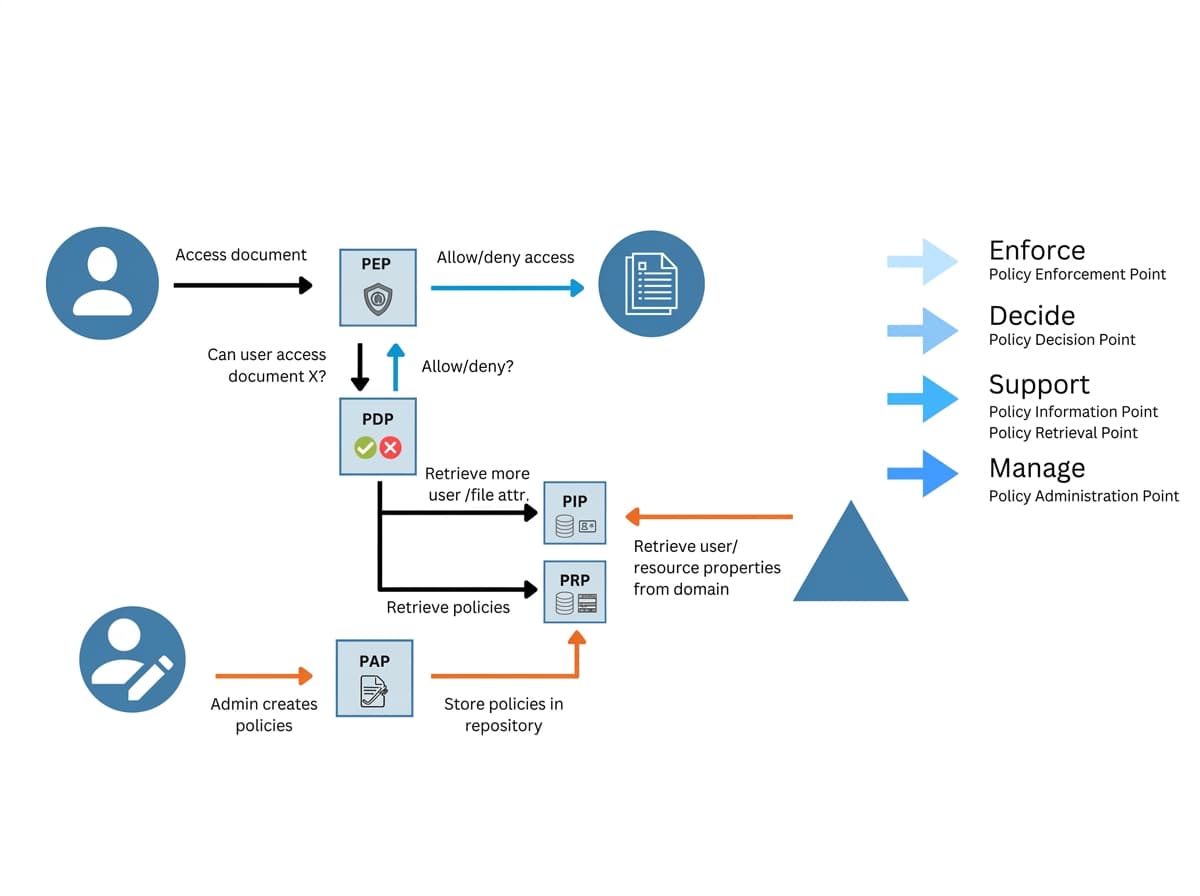
The policy enforcement architecture we deploy operates on the principle of pre-execution semantic validation. Before any tool invocation reaches a backend system, it must pass through a policy engine that evaluates the proposed invocation against formalized business rules. The engine, running an open-source policy framework such as Cedar, models the domain as typed entities with attributes and relationships. Policies are expressed as declarative rules: agents with compliance scope may read financial data but may not initiate transactions, or tool invocations modifying customer records require explicit human approval. The engine evaluates each tool call against the applicable policies. Calls that satisfy policy proceed to execution. Calls that violate policy are blocked. Calls that require approval are routed to the appropriate human reviewer.
This architecture provides guarantees that prompt-level safety measures cannot. A model cannot talk its way past the policy engine. A jailbreak that convinces the model to generate a dangerous tool call will be blocked at the gateway, because the policy engine evaluates the tool call itself, not the model's intent. The audit trail is complete: every tool invocation, whether approved, blocked, or escalated, is logged with its parameters, the evaluating policy, and the enforcement decision. This satisfies the accountability requirements of regulated industries while enabling the operational flexibility that agent systems provide.