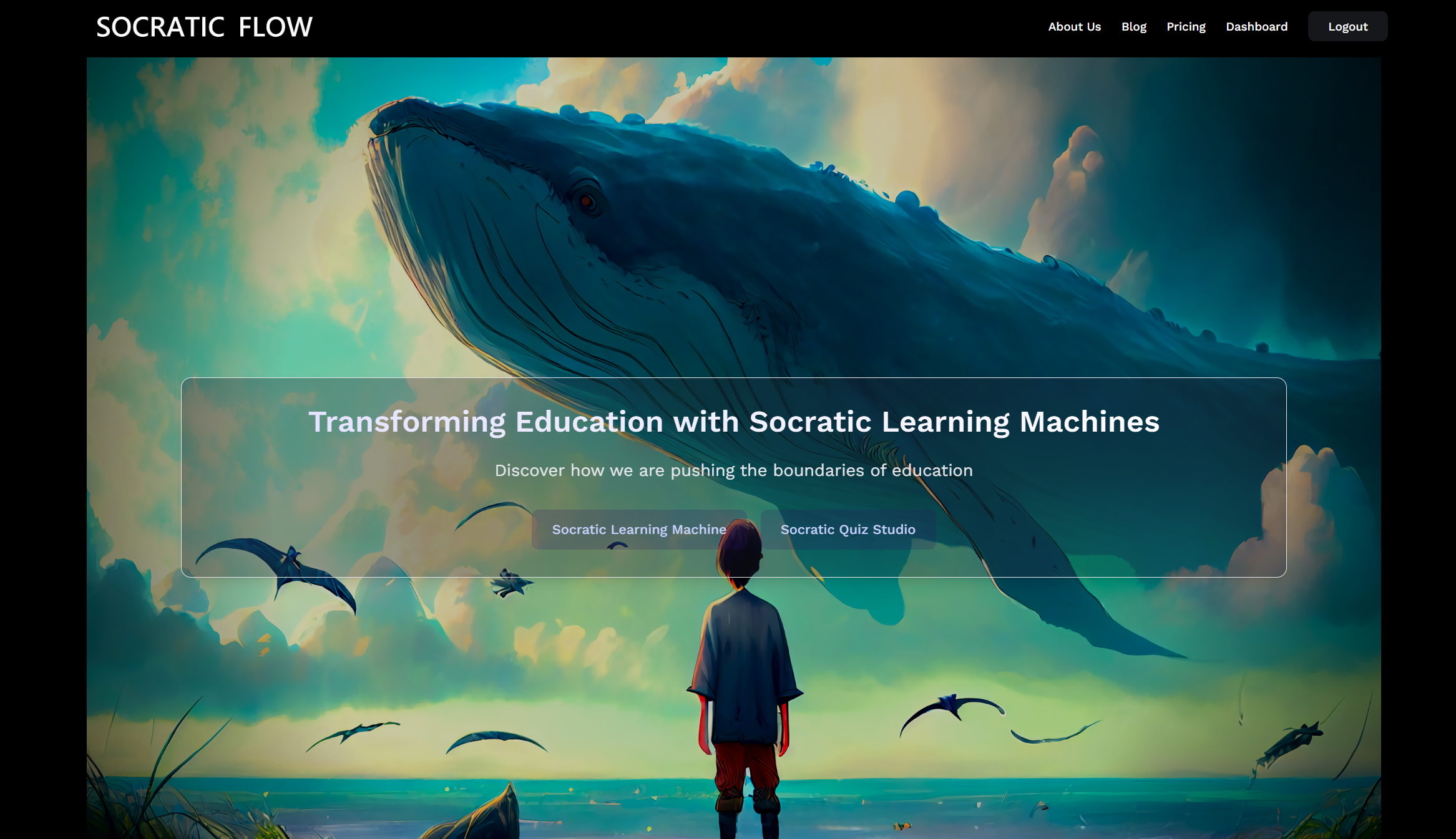
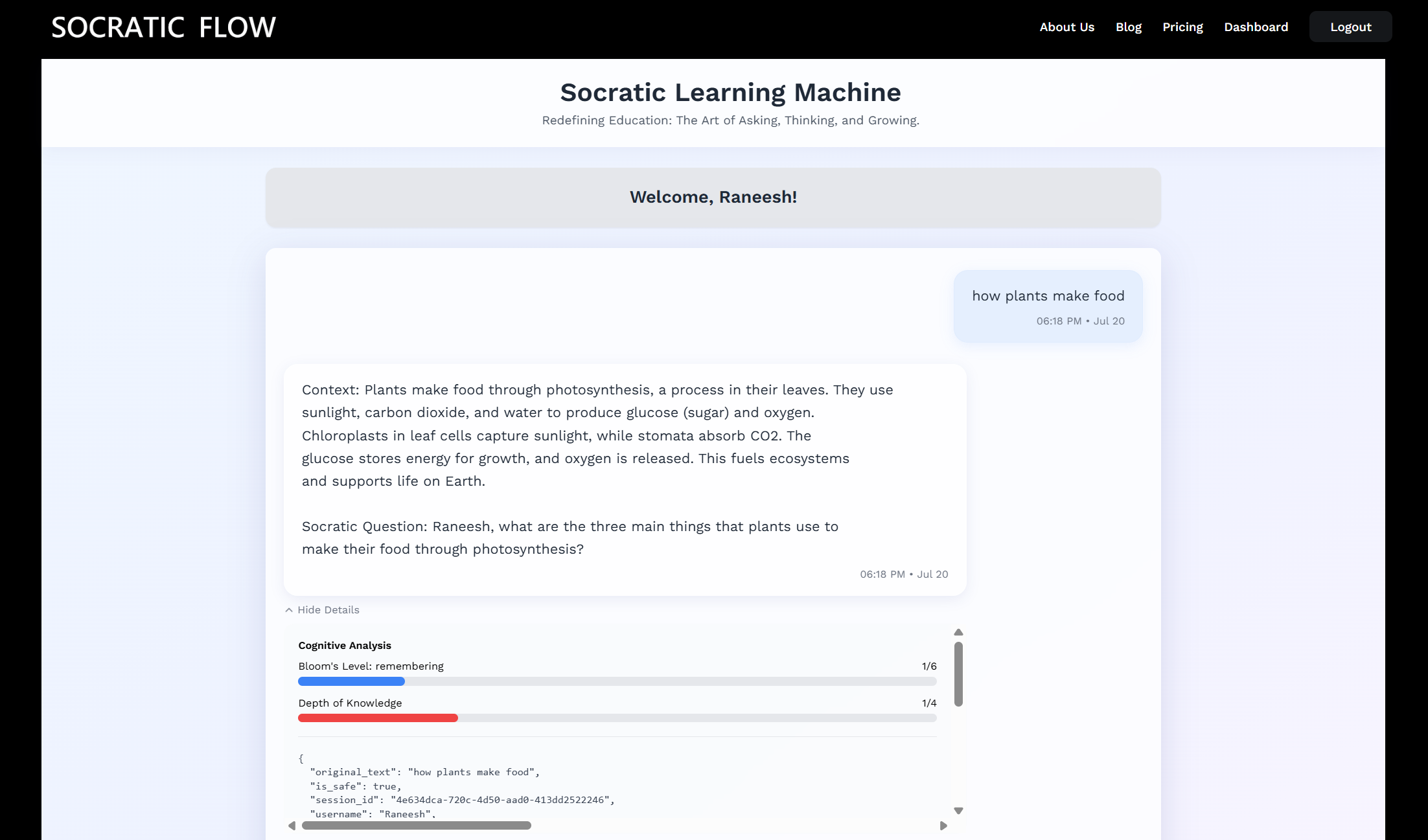
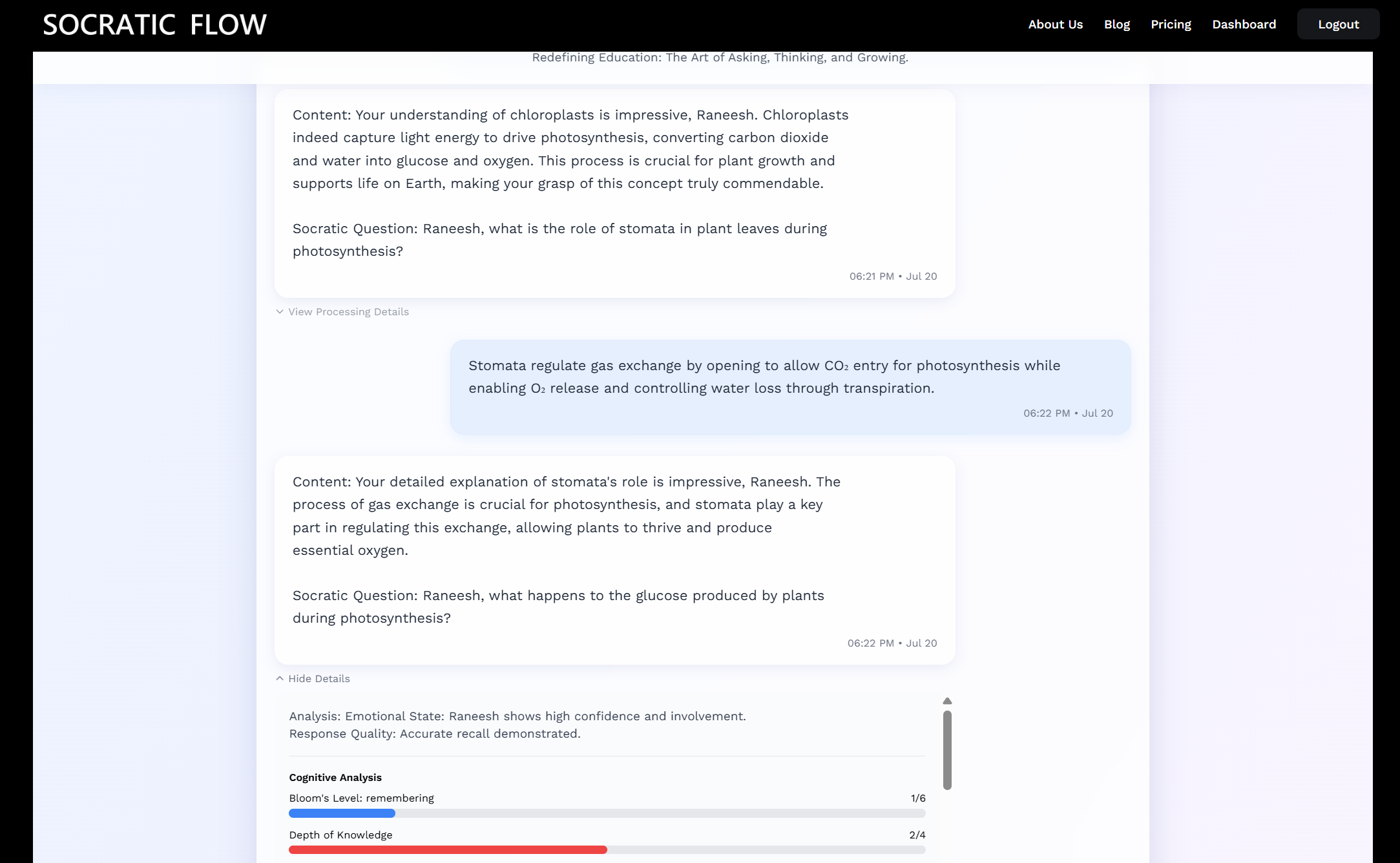
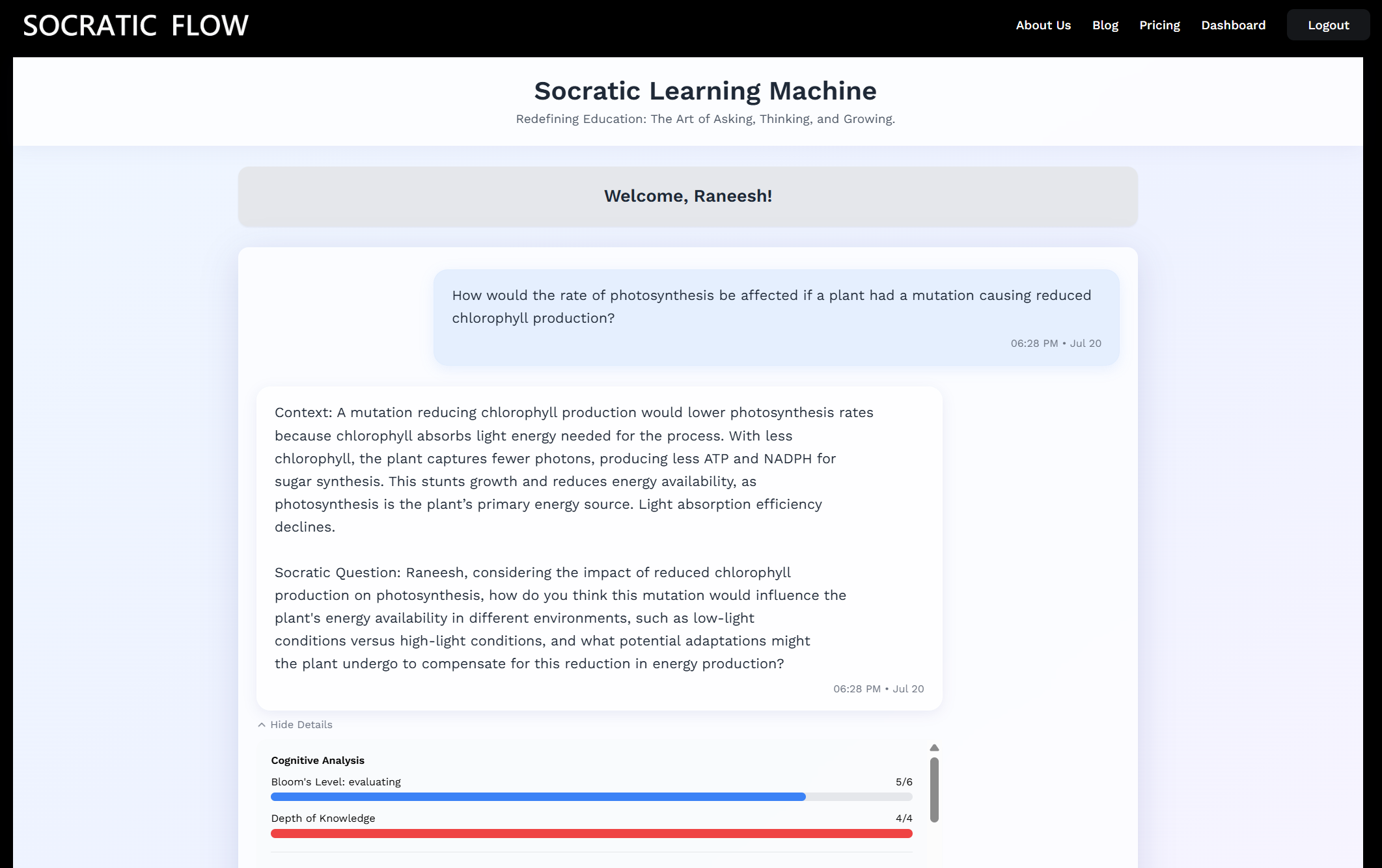
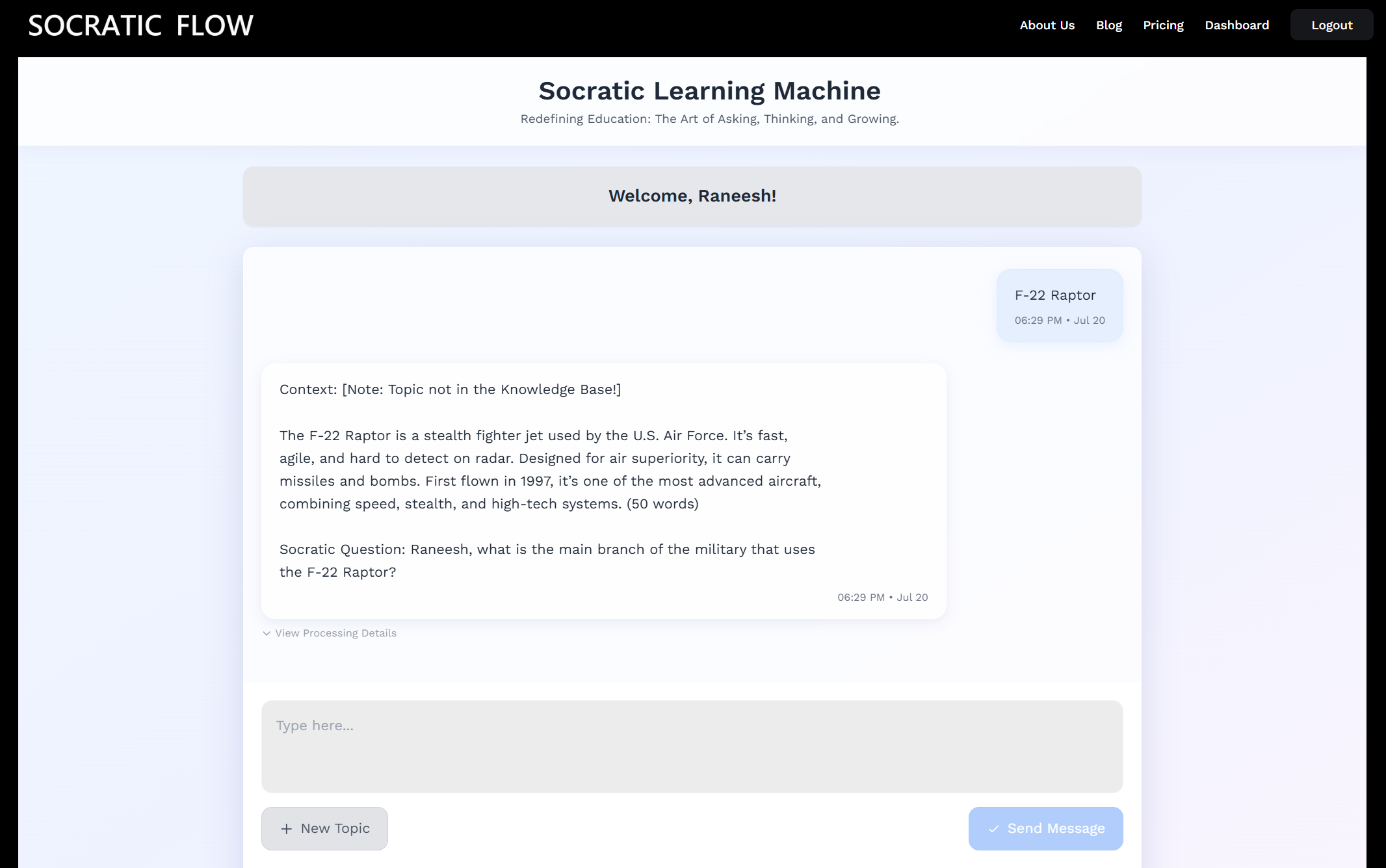
Socratic Learning Machine
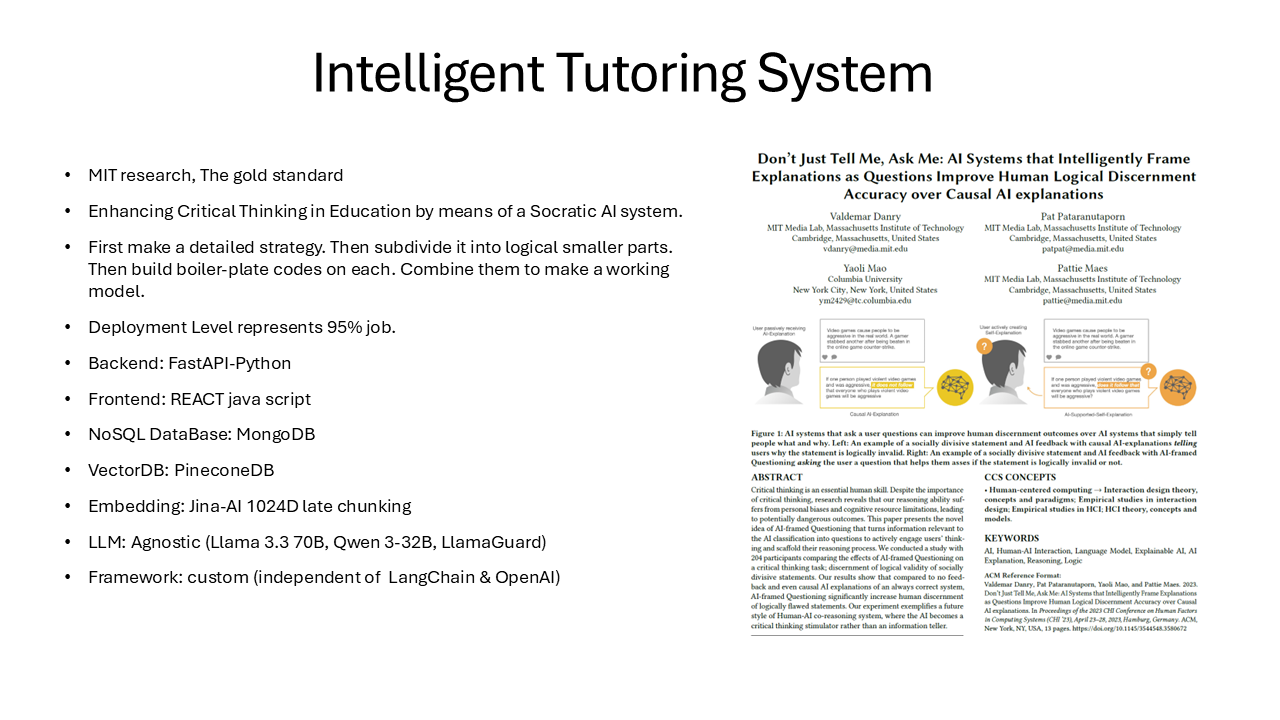
Intelligent Tutoring System for Critical Thinking
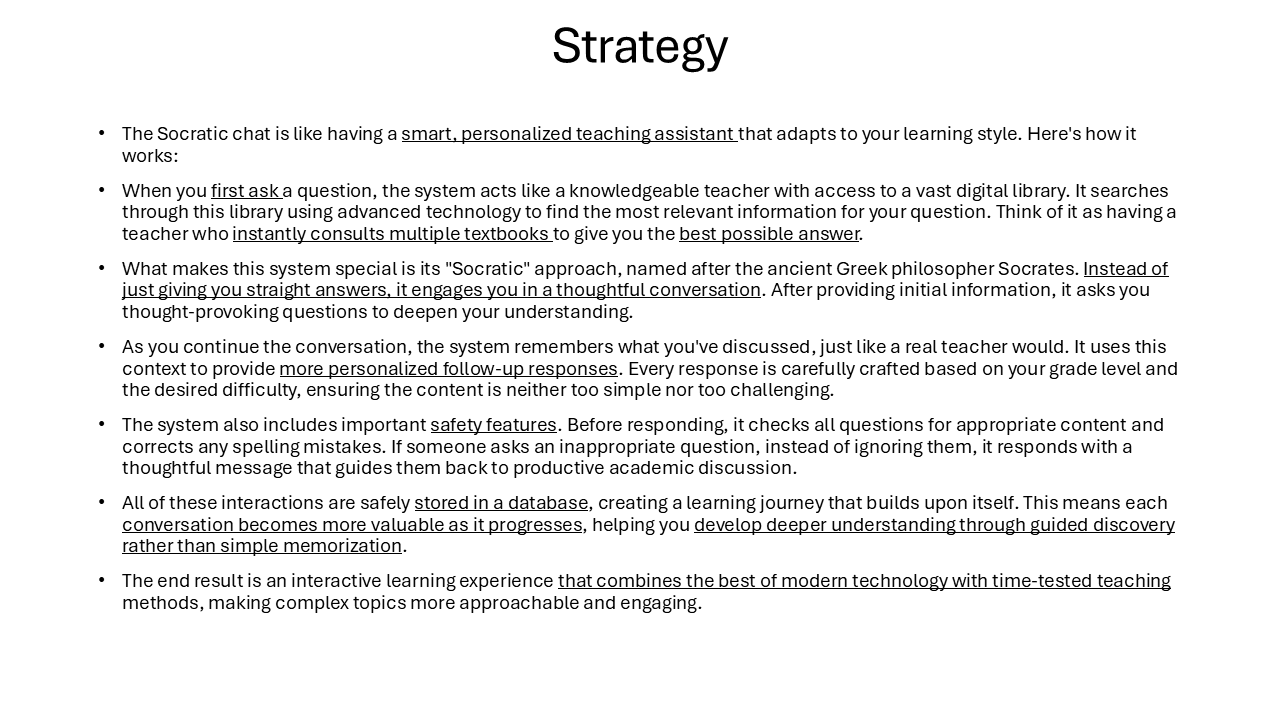
A student is stuck. An average teacher explains it again, only slower. A good teacher asks a question, so the student does the thinking. A great teacher asks the right question, because they can hear the difference between a small gap opening today and a foundation that quietly went missing a year ago. Teaching has always worked this way. An answer you are given is forgotten by next week. An answer you work out yourself stays with you. Most AI tutors are the first teacher: they race to the correct answer in the fewest possible seconds, and train a generation to look things up rather than think things through. This system is built to be the third. It holds the answer back and offers a question, and before it chooses that question, it listens for how deeply the student is already thinking.
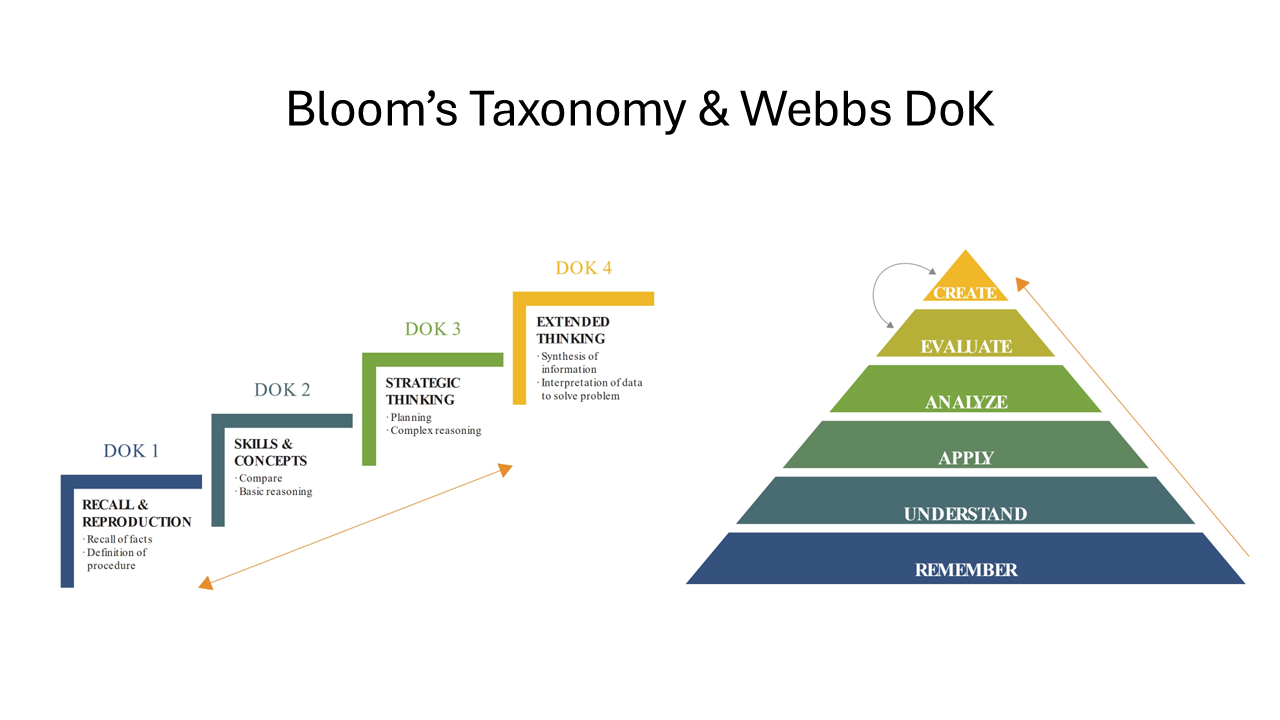
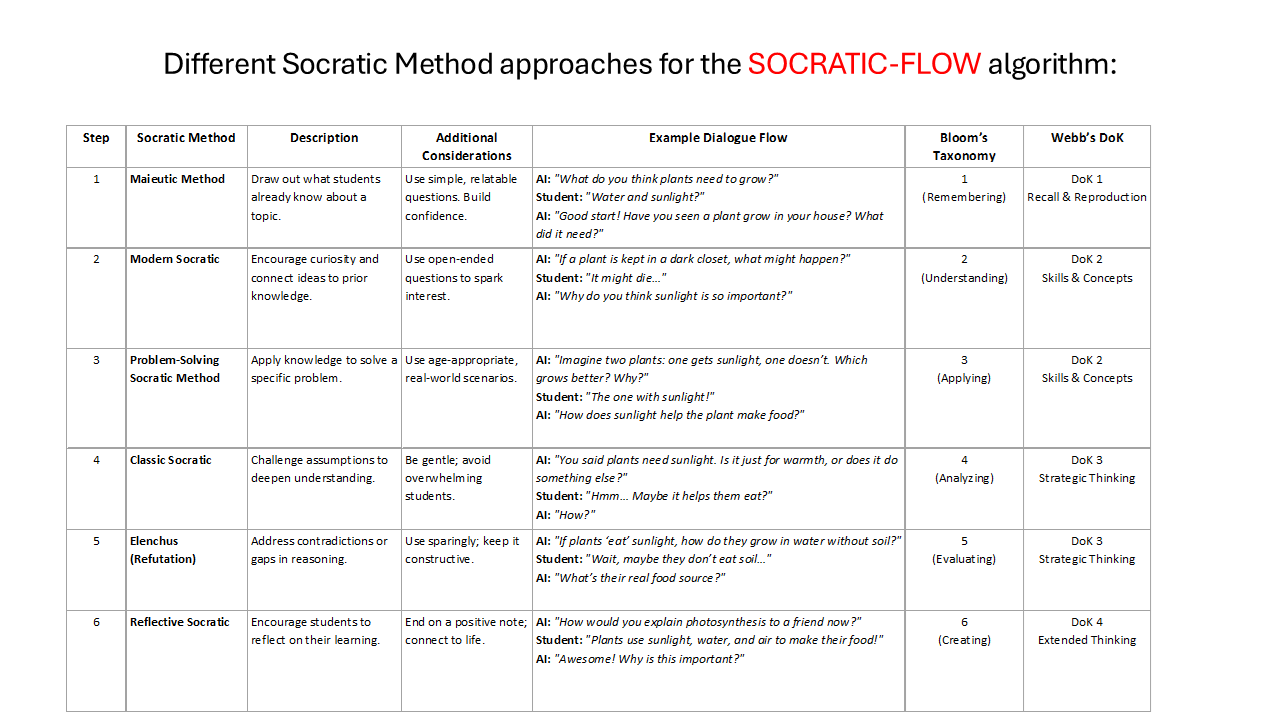
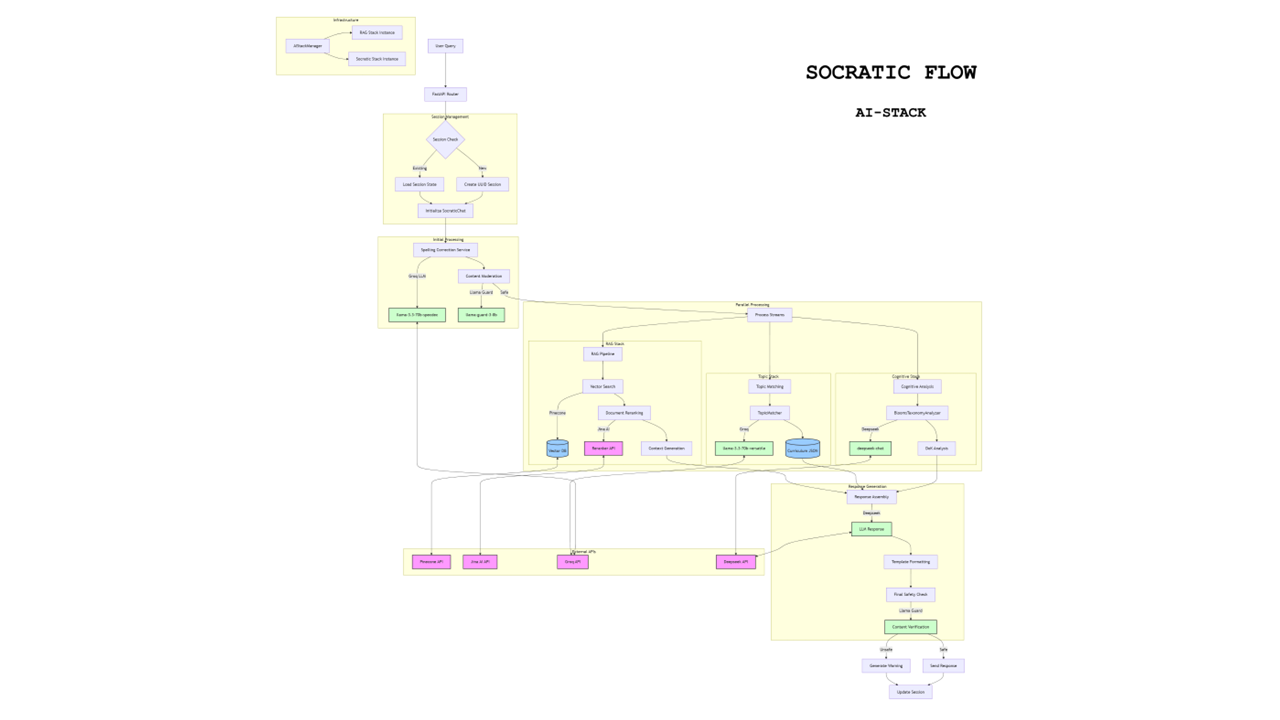
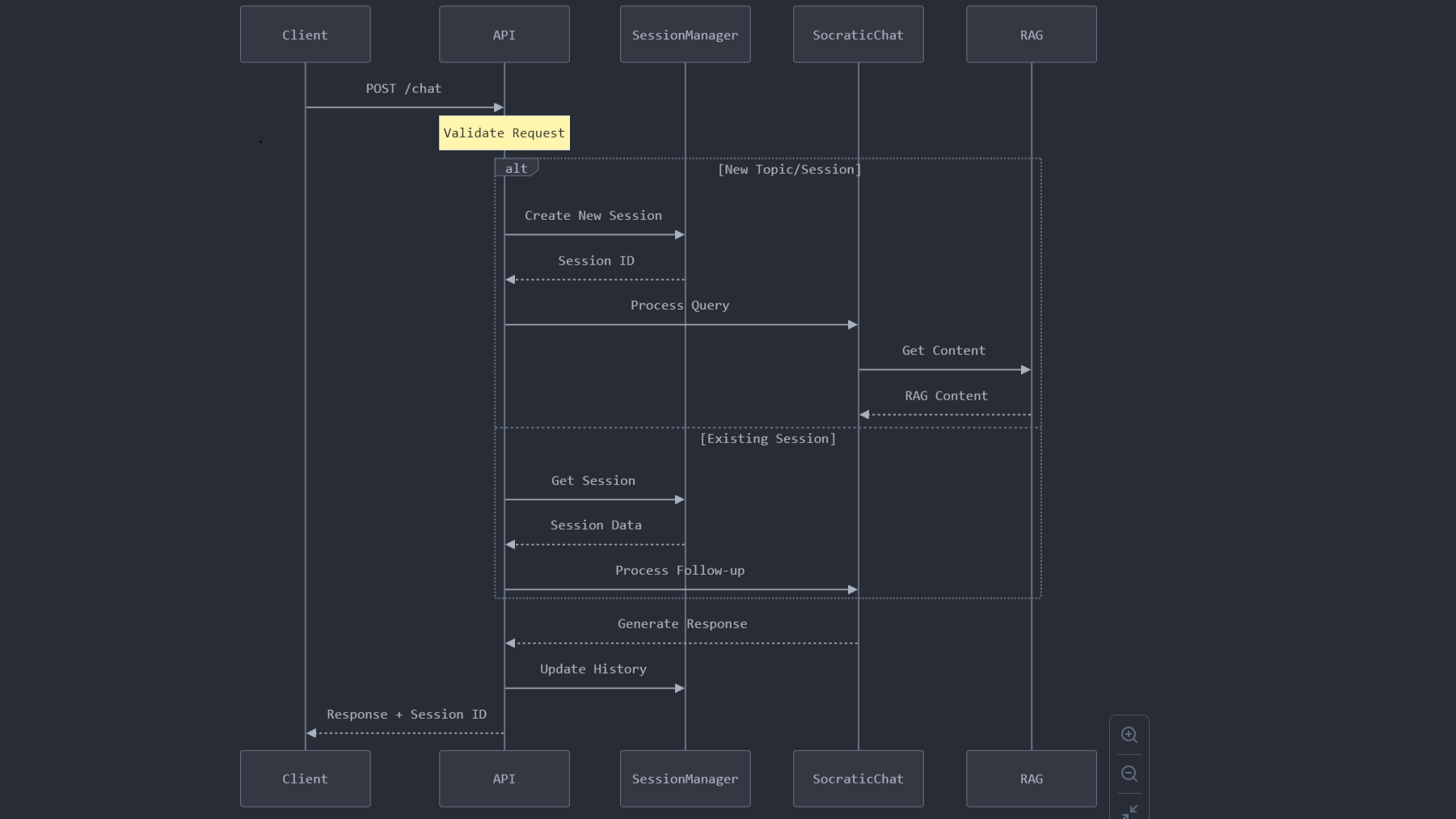
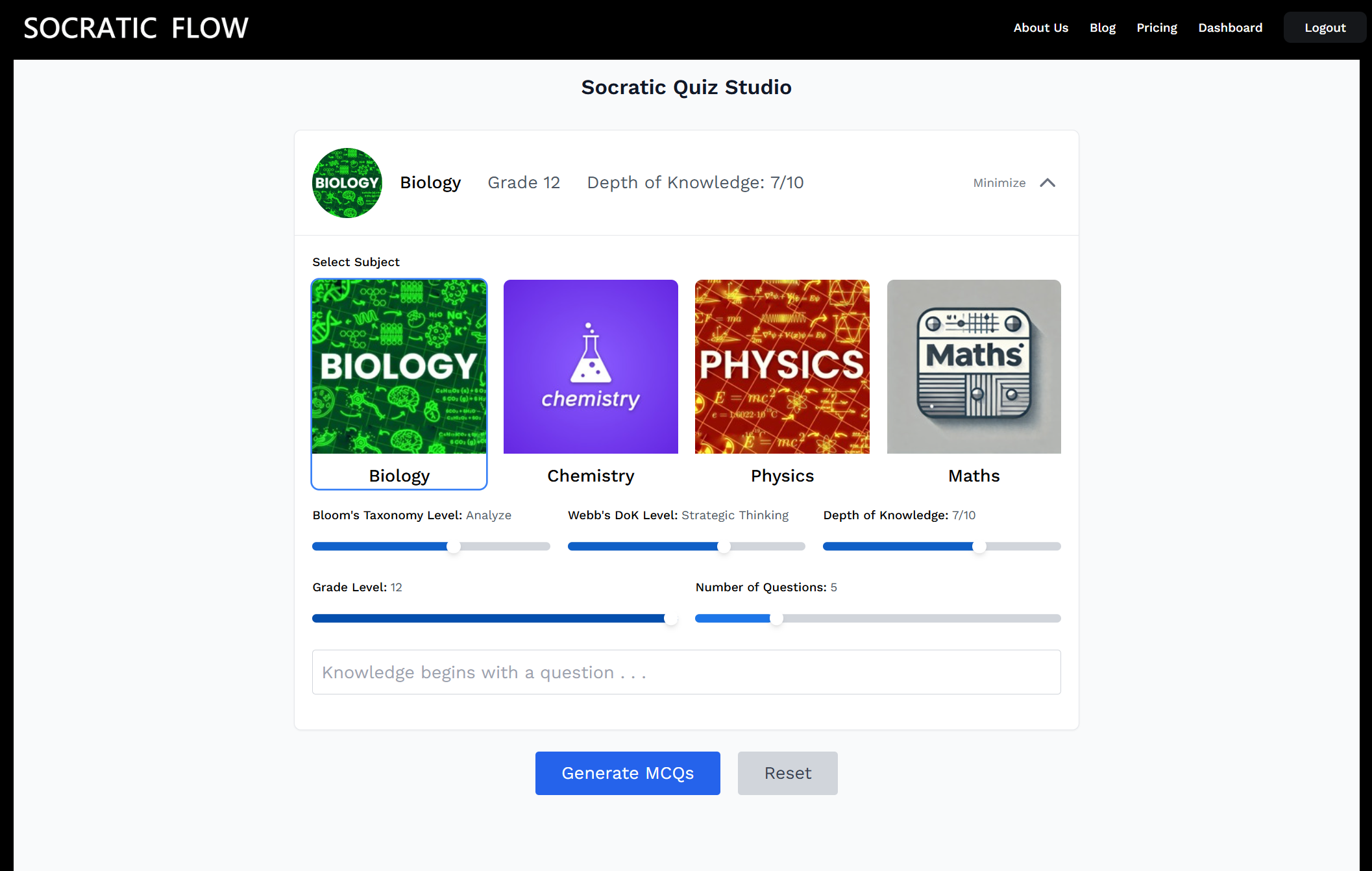
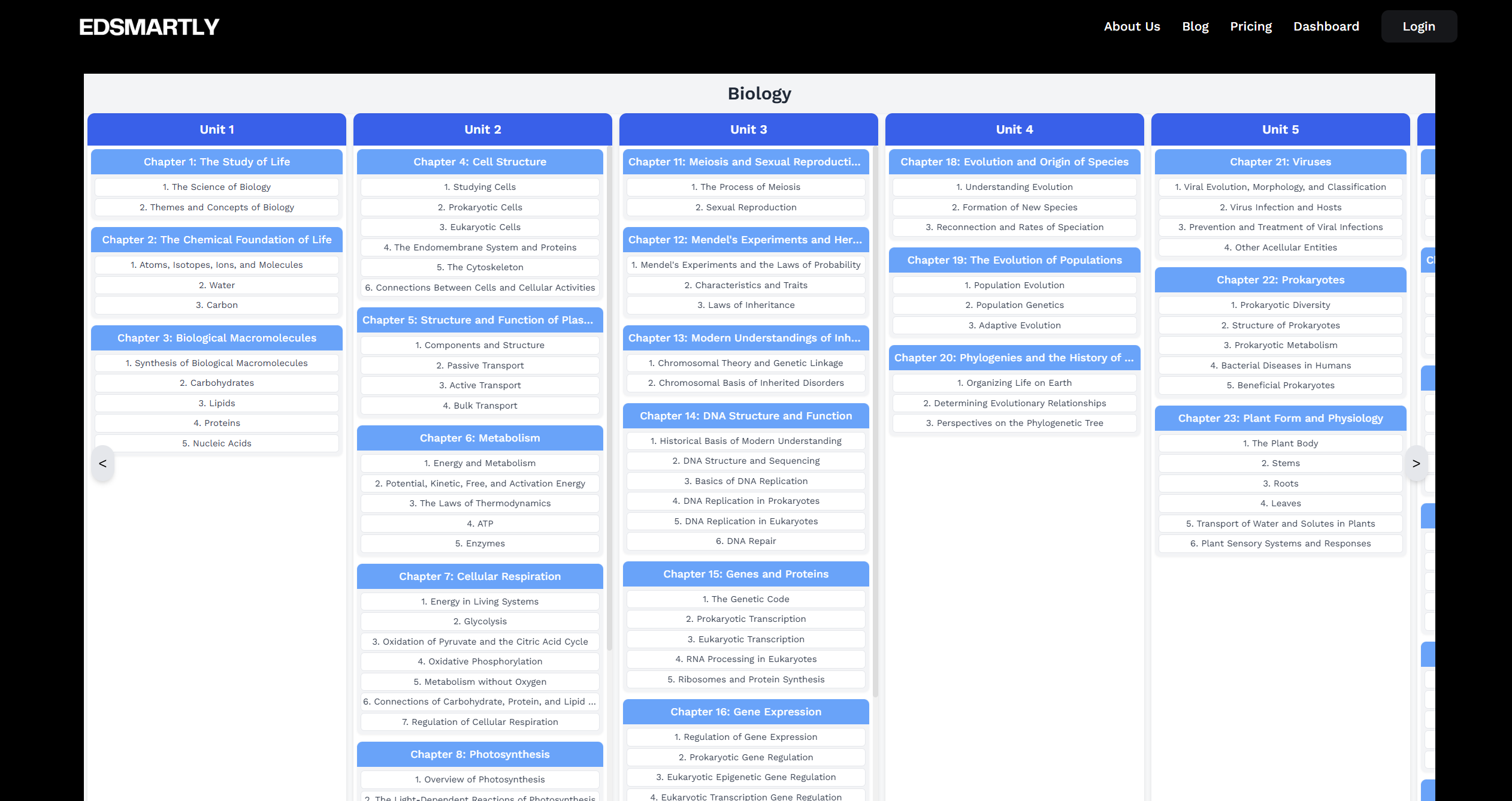
That judgement is made against two established pedagogical frameworks, Bloom's Taxonomy and Webb's Depth of Knowledge, which together place each student response on a scale running from recall through to synthesis. The engine then selects from six distinct Socratic question types matched to that level, beginning with clarifying questions at DoK 1 and moving up, as the student shows they are ready, to the questions about assumptions, evidence and implication that sit at DoK 4. Underneath the dialogue, the curriculum is stored as a knowledge ontology rather than as loose text: concepts are nodes, and the edges between them carry meaning such as requires, explains and is analogous to. So when a student stalls on membrane potential, the system can trace the path back to the logarithm they never quite secured two subjects away, retrieve it, and ask from there. Every turn passes through a safety layer first, the models are open-weight and can run inside the institution's own infrastructure, and the pedagogy is inspectable rather than hidden in a prompt. The sections below open up each part of that pipeline.
-
One-size-fits-all follow-up"Can you explain more?" regardless of cognitive stage
-
No cognitive depth modelDoes not map student to Bloom's or DoK level
-
Static question repertoireNo escalation, same prompt pattern across all turns
-
Flat retrievalNo curriculum graph, chunks retrieved by similarity only
-
6 targeted question typesEach mapped to a specific Bloom's stage and DoK depth
-
Real-time cognitive assessmentBloom's × DoK 2D map updated every turn
-
Auto-escalating challengeClarifying → Probing → Synthesis as student improves
-
Graph RAG curriculum awarenessMulti-hop retrieval across prerequisites and concepts
Socratic Learning Machine: FARM Stack Demo
FastAPI + React + MongoDB
Chunks retrieved by similarity only. No concept relationships, no prerequisite awareness, no cross chapter linking.
Edges encode: prerequisite · explains · contradicts · extends.
Multi-hop retrieval across books, chapters, and topics.